

Introduction
Pumpkin cookies can be surprisingly tricky. You can follow a pumpkin cookies recipe carefully and still end up with cookies that spread too much, stay unusually thick, become dry around the edges, or have a soft, cake-like texture instead of the cookie you expected.
The main reason is that pumpkin adds considerable moisture to cookie dough, while flour, eggs, butter, sugar, and leavening agents all affect how that moisture behaves during baking. Small changes in ingredients or technique can therefore produce noticeably different results.
This guide breaks down the most common pumpkin cookie problems and explains how to fix them. Whether you’re troubleshooting an easy pumpkin cookies recipe, making chocolate chip pumpkin cookies, or adapting a recipe for gluten-free, healthy, or keto baking, these practical tips can help you get more consistent results.
Why Are Pumpkin Cookies Different From Regular Cookies?
Pumpkin contains a lot of water, which changes the structure of cookie dough. That extra moisture can make pumpkin cookies softer and more cake-like than classic cookies.
This is why simply taking a regular cookie formula and adding pumpkin can produce unexpected results.
Pumpkin can affect:
- Dough consistency
- Cookie spread
- Browning
- Texture
- Baking time
- Flour requirements
- Perceived sweetness
A good pumpkin cookie recipe accounts for that additional moisture rather than treating pumpkin as just another dry ingredient.
Quick Guide: What Went Wrong With Your Pumpkin Cookies?
| Problem | Likely cause | What to try |
|---|---|---|
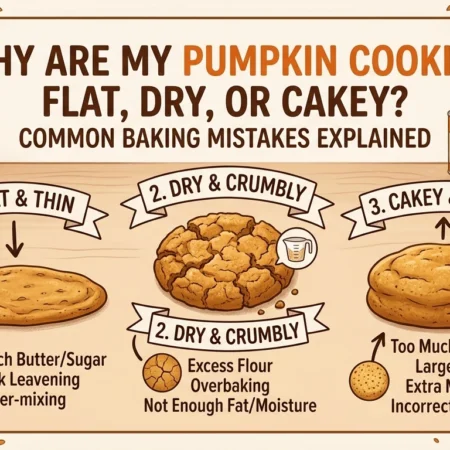
| Cookies are too flat | Excessive spreading, warm dough, too much liquid or fat | Chill dough and check ingredient measurements |
| Cookies are dry | Too much flour or overbaking | Measure flour carefully and reduce baking time |
| Cookies are very cakey | Too much moisture or leavening | Follow the recipe’s pumpkin and flour ratios |
| Cookies don’t spread | Dough is too cold or too firm | Follow the recipe’s chilling instructions |
| Cookies are pale | High moisture or insufficient baking | Bake according to the recipe until properly set |
| Centers stay too wet | Dough is too moist or cookies are underbaked | Allow sufficient baking time |
| Cookies become hard after cooling | Overbaking or moisture loss | Remove them when properly set |
Why Are My Pumpkin Cookies Flat?
Flat pumpkin cookies usually mean the dough is spreading more than expected during baking.
Several factors can contribute to this.
1. Your Butter Was Too Warm
Soft butter is useful for many cookie recipes, but melted or excessively warm butter can behave differently.
When the fat melts quickly in the oven, the dough may spread before the cookie structure has had enough time to set.
Try this: Follow the recipe’s instructions for butter temperature. If the recipe allows it, chilling the prepared dough can help control excessive spreading.
2. Your Dough Has Too Much Moisture
Pumpkin contributes moisture, and different pumpkin products can vary in consistency.
If you add more pumpkin than the recipe calls for, the dough can become softer and behave differently in the oven.
Try this: Measure the pumpkin accurately and don’t add extra simply because the dough looks thick.
3. You Changed the Flour Amount
Flour provides structure. If you accidentally use less flour than required, there may not be enough structure to hold the cookie’s shape.
One common mistake is measuring flour by scooping directly from a tightly packed container.
For better consistency, use a kitchen scale when the recipe provides weights. If you’re using cups, use the measuring method specified by the recipe.
4. Your Baking Sheet Was Hot
Putting fresh dough onto a warm baking sheet can cause the fat to melt before the cookies properly begin baking.
Better approach: Allow baking sheets to cool between batches or use another room-temperature sheet.
Why Are My Pumpkin Cookies Dry?
Dry pumpkin cookies are usually the result of too much flour, too little moisture, or excessive baking.
Too Much Flour
Flour absorbs moisture. Adding significantly more flour than the recipe requires can turn a soft pumpkin cookie into a dense or dry one.
Avoid repeatedly adding flour just because the dough feels sticky. Pumpkin cookie dough may naturally be softer than traditional chocolate chip cookie dough.
Overbaking
This is one of the easiest mistakes to make.
Cookies continue to firm as they cool, so they do not always need to look completely firm when you remove them from the oven.
Follow the recipe’s visual cues and recommended baking range rather than waiting until the cookies appear completely dry.
Your Oven May Run Hot
Oven temperatures can vary, and an oven that runs hotter than expected can bake cookies more quickly.
If your cookies repeatedly become dry even when you follow the same recipe, an inexpensive oven thermometer can help you understand whether the oven temperature is accurate.
Why Are My Pumpkin Cookies So Cakey?
This is one of the most common complaints when people search for a soft pumpkin cookies recipe.
The interesting part is that some pumpkin cookies are supposed to be cakey.
Pumpkin adds moisture, while eggs and leavening agents can contribute to a softer, puffier texture. If you want a thin, chewy cookie similar to a classic chocolate chip cookie, you need a recipe specifically formulated for that texture.
Too Much Pumpkin
Adding extra pumpkin can increase moisture and make the cookies softer and more cake-like.
Stick closely to the recipe’s specified amount.
Too Much Leavening
Baking soda and baking powder affect how cookies rise and spread. Using more than the recipe calls for can significantly change the texture.
Don’t increase the amount to make cookies “fluffier” unless the recipe specifically instructs you to do so.
Too Many Eggs
Eggs contribute moisture and structure. Adding an extra egg can change the balance of the dough and produce a different texture.
This is particularly important when adapting a recipe.
How to Make Pumpkin Cookies Softer Without Making Them Cakey
If your goal is a genuinely soft pumpkin cookies recipe, focus on moisture retention rather than simply adding more pumpkin.
Helpful techniques include:
- Avoid overbaking.
- Store cooled cookies in an airtight container.
- Measure flour accurately.
- Follow the recipe’s recommended pumpkin quantity.
- Avoid unnecessary flour additions.
- Use the correct type of sugar specified by the recipe.
- Allow the cookies to cool as directed.
Softness is a balance. Adding more moisture does not automatically produce a better cookie.
Why Don’t My Pumpkin Cookies Spread?
Not every pumpkin cookie is supposed to spread dramatically. However, if your cookies remain almost exactly the shape in which you placed them, investigate the dough.
Possible causes include:
- Dough was chilled for too long.
- Too much flour was added.
- Butter was too firm.
- The recipe is designed for thick cookies.
- Your baking temperature is too low.
- The dough contains insufficient spread-promoting ingredients.
If your recipe specifically tells you to chill the dough, don’t automatically remove that step. Chilling can improve texture and control spreading.
Why Are My Pumpkin Cookies Pale?
Pumpkin cookies often have a lighter appearance than some traditional cookies because their moisture content and ingredient composition can affect browning.
If the cookies are cooked through but remain relatively light, that does not necessarily mean they are underbaked.
Look for more reliable indicators:
- The edges are set.
- The center is no longer wet.
- The cookie has developed the texture described by the recipe.
- The underside has some color.
Do not bake cookies significantly longer just to achieve a darker color. You may end up with dry cookies.
Why Are My Pumpkin Cookies Wet in the Middle?
A moist center can be desirable in a soft cookie, but there is a difference between a soft center and uncooked dough.
If the center remains visibly wet after cooling, possible causes include:
- Cookies are too large.
- Dough contains excessive moisture.
- Baking time is too short.
- Oven temperature is lower than expected.
- The baking sheet or oven setup differs from the original recipe.
Try making a test batch with smaller portions if the recipe allows it. This can help determine whether size is affecting the bake.
How Different Pumpkin Cookie Recipes Behave
Not every pumpkin cookie is designed to have the same texture.
| Recipe style | Typical goal | What to expect |
|---|---|---|
| Classic pumpkin cookie | Soft and tender | Moist, often somewhat cakey |
| Chocolate chip pumpkin cookie | Soft with chocolate | Tender center with chocolate pockets |
| Healthy pumpkin cookie | Nutrient-conscious ingredients | Texture depends heavily on substitutions |
| Keto pumpkin cookie | Low-carbohydrate ingredients | Often different from wheat-flour cookies |
| Gluten-free pumpkin cookie | No gluten-containing ingredients | Texture depends on flour blend |
This is important when searching for the best pumpkin cookies recipe. “Best” depends on what you want from the finished cookie.
Chocolate Chip Pumpkin Cookies: Common Problems
A chocolate chip pumpkin cookies recipe adds another variable because chocolate chips increase the amount of solid material in the dough.
If your cookies are spreading too much, check the underlying dough before blaming the chocolate chips.
If they are too cakey, focus on the recipe’s pumpkin, flour, eggs, and leavening balance.
For better distribution, gently fold chocolate chips into the finished dough rather than aggressively mixing them.
What About Healthy Pumpkin Cookies?
A healthy pumpkin cookies recipe can be delicious, but substitutions can significantly change texture.
For example, replacing refined flour with oats or alternative flours, reducing sugar, or replacing butter can alter:
- Moisture
- Spread
- Browning
- Tenderness
- Sweetness
- Structure
The best approach is to use a recipe designed around those ingredients rather than modifying a conventional recipe extensively.
“Healthy” is also not a single technical baking category, so evaluate the actual ingredients and nutritional goals of the recipe.
Troubleshooting Gluten-Free Pumpkin Cookies
A gluten free pumpkin cookies recipe can behave differently from a wheat-based recipe because gluten-free flour blends use different combinations of flours and starches.
Do not assume that every gluten-free flour can replace wheat flour in the same quantity.
For more consistent results:
- Use a flour blend intended for cookies or general baking.
- Follow the recipe’s specific substitution instructions.
- Allow the dough to rest if the recipe recommends it.
- Avoid adding extra flour simply because the dough feels different from wheat-based dough.
- Pay attention to the final texture rather than comparing raw dough directly with wheat-flour dough.
If you are baking for someone who must strictly avoid gluten, check all packaged ingredients and prevent cross-contact during preparation.
Can Keto Pumpkin Cookies Have the Same Texture?
A keto pumpkin cookies recipe generally uses low-carbohydrate ingredients rather than conventional wheat flour and sugar.
That means the texture can be noticeably different from a traditional pumpkin cookie.
Almond flour, coconut flour, sugar alternatives, and other keto-friendly ingredients absorb moisture and behave differently from wheat flour and granulated sugar.
If your keto cookies are too dry, too crumbly, or too soft, don’t automatically modify the recipe with large amounts of flour or liquid. The proportions need to remain balanced.
How to Get Better Results From Any Pumpkin Cookie Recipe
Whether you’re following an easy pumpkin cookies recipe or a more advanced formula, these habits can make your results more consistent.
1. Read the Recipe First
Check whether ingredients need to be softened, chilled, melted, or brought to a particular temperature.
2. Measure Carefully
Baking is sensitive to ingredient ratios. A kitchen scale is particularly useful for flour.
3. Use the Pumpkin Specified
Don’t casually add extra pumpkin to use up an opened can. Additional moisture can change the entire dough.
4. Don’t Overmix
Once flour is incorporated, mix only as much as necessary.
5. Bake a Test Cookie
If you’re making a new recipe or changing ingredients, bake one cookie first.
This lets you see how much it spreads and whether the texture is right before committing the entire batch.
6. Let Cookies Cool
Cookies often firm up as they cool. Judge the final texture after the cooling period recommended by the recipe.
Can You Fix Pumpkin Cookie Dough Before Baking?
Sometimes you can, but the best fix depends on the problem.
If the dough is unusually wet, resist the temptation to add large amounts of flour immediately. First check whether you accidentally measured an ingredient incorrectly.
If the dough is spreading excessively, chilling may help if the recipe is compatible with chilling.
If the dough is unusually stiff, verify that you haven’t accidentally added too much flour.
The safest approach is to identify the cause before making a major adjustment.
What Is the Best Pumpkin Cookie Texture?
There is no single correct texture.
Some people want soft, thick, cakey pumpkin cookies. Others want thinner cookies with slightly crisp edges and a tender center.
That’s why searches for the best pumpkin cookies recipe ever, best pumpkin cookies recipe, and soft pumpkin cookies recipe can lead to very different recipes.
Before changing your recipe, decide what you actually want:
- Soft and cakey: Choose a recipe designed for a cake-like texture.
- Soft and chewy: Look for a formula designed specifically for chewy cookies.
- Crisp edges: Use a recipe formulated for greater spread and browning.
- Gluten-free: Choose a recipe developed with gluten-free flour.
- Keto: Use a recipe formulated around low-carbohydrate ingredients.
Frequently Asked Questions
Why are my pumpkin cookies so cakey?
Pumpkin cookies can become cakey because pumpkin adds moisture and recipes may also contain eggs and leavening agents that encourage a soft, puffy structure. If you want a chewier cookie, use a recipe specifically formulated for a chewy pumpkin cookie rather than simply reducing the leavening.
Why did my pumpkin cookies spread too much?
Pumpkin cookies may spread excessively because of warm butter, excess moisture, too little flour, or a warm baking sheet. Accurate ingredient measurements and properly chilled dough, when appropriate for the recipe, can help control spreading.
How do I keep pumpkin cookies soft?
To keep pumpkin cookies soft, avoid overbaking them and store them in an airtight container after they have cooled. Adding extra pumpkin is not a reliable solution because excessive moisture can make the cookies cakey or unstable.
Can I make pumpkin cookies gluten-free?
Yes, pumpkin cookies can be made gluten-free by using a recipe formulated with suitable gluten-free flour or a tested gluten-free flour blend. Do not assume every gluten-free flour can replace wheat flour in exactly the same way.
Can I make healthy pumpkin cookies?
Yes, you can make pumpkin cookies using ingredients that fit a particular healthy-eating goal, but substitutions can significantly change texture and flavor. For the most reliable result, use a healthy pumpkin cookies recipe developed around those ingredients instead of making multiple substitutions in a conventional recipe.
Why are my pumpkin cookies dry?
Pumpkin cookies are often dry because they contain too much flour or have been baked for too long. Measure flour carefully, follow the recipe’s baking guidance, and remember that cookies usually become firmer as they cool.
Final Thoughts
When pumpkin cookies turn out flat, dry, or unexpectedly cakey, the problem usually comes down to the balance between moisture, flour, fat, eggs, leavening, and baking time. Pumpkin itself is a major factor because it adds moisture and changes the behavior of a traditional cookie dough.
Instead of immediately searching for the best pumpkin cookies recipe ever, start by identifying what went wrong with your current batch. Check your measurements, pumpkin quantity, butter temperature, flour, leavening, and baking time before changing the recipe.
Once you understand those variables, you’ll have much more control over everything from a classic pumpkin cookies recipe to chocolate chip pumpkin cookies, healthy pumpkin cookies, keto pumpkin cookies, and gluten free pumpkin cookies.
And if you already have a pumpkin cookie recipe that you love, use these troubleshooting principles to fine-tune the texture until it matches exactly what you want.



No Comment! Be the first one.